

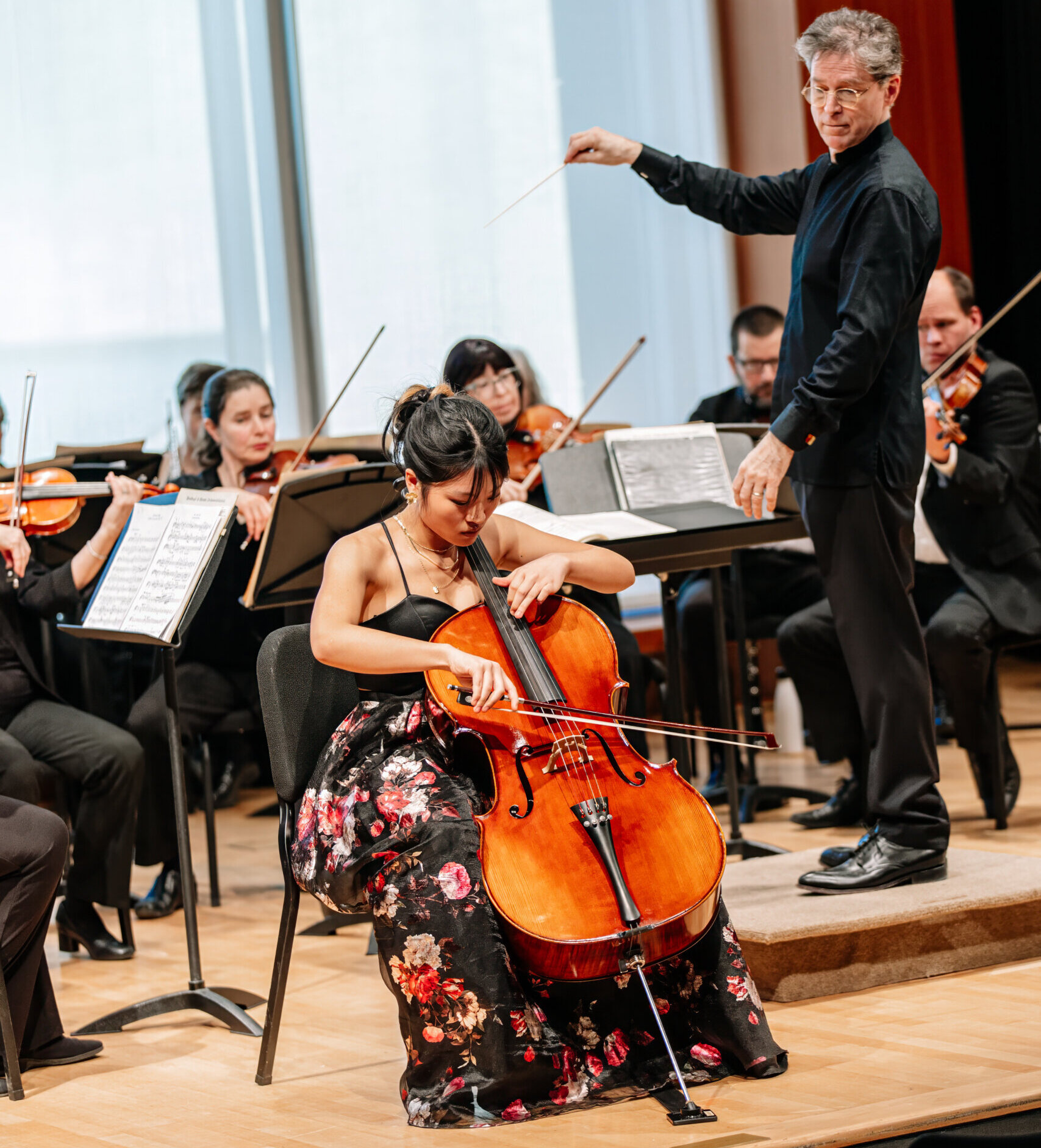
Most musicians hope to master and rise to the ranks of musical prowess on at least one instrument. It’s not uncommon, though, to find a musician who is fluent on two instruments. To not only play but gain award-winning proficiency on three instruments is a unique feat to conquer. Ally Hsieh has done just that.
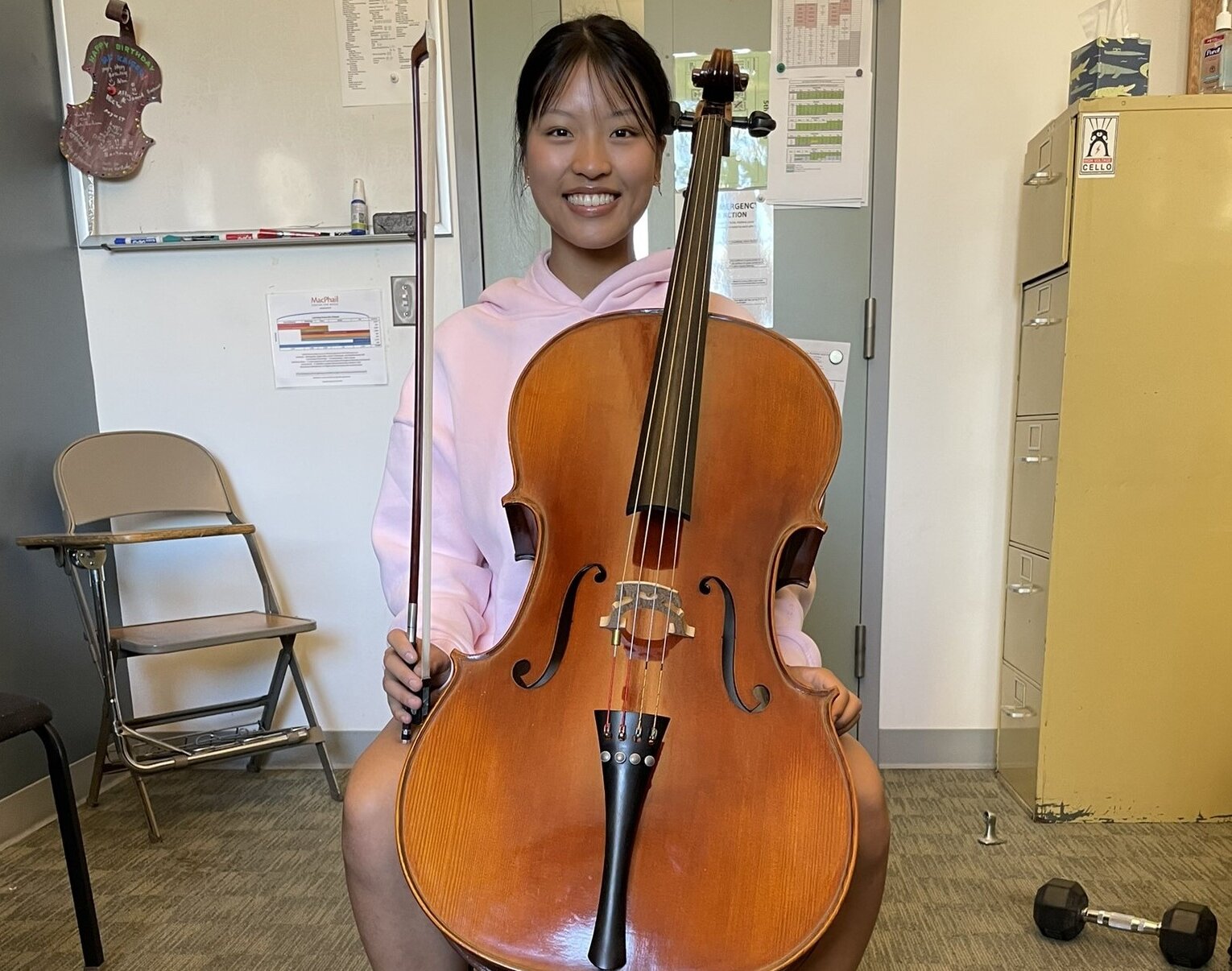
At 18 years old, Ally has become proficient on three instruments, piano, cello, and voice, winning competitions and gaining professional performance opportunities at the local and national level, including a recent performance at Carnegie Hall.
However, Ally’s purpose for making music and how she began runs deep, extending far beyond the stage.
The Taiwanese surname Hsieh, is pronounced as “She-Eh”.
The Genesis: Centering Music Education and Emotional Expression
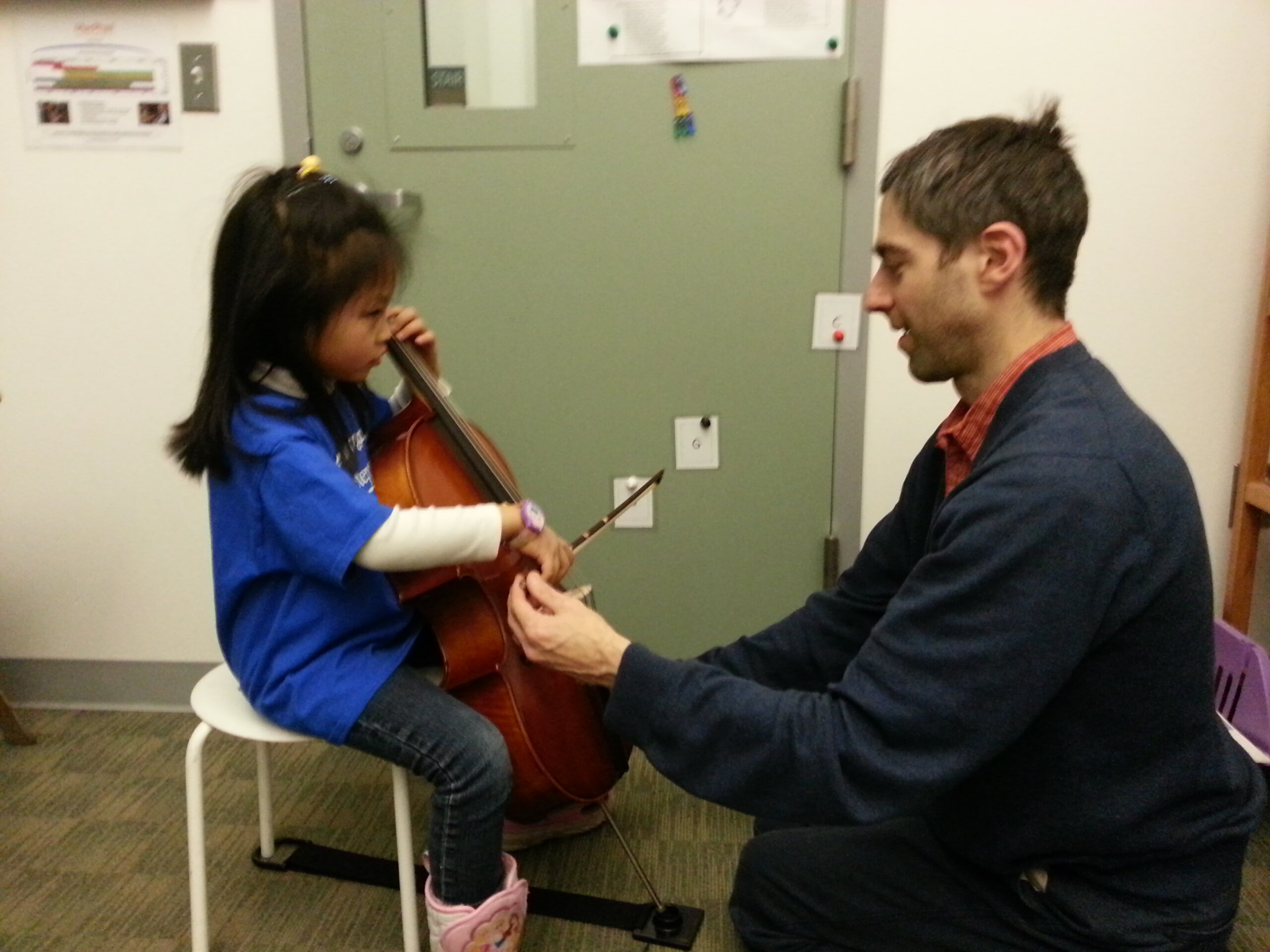
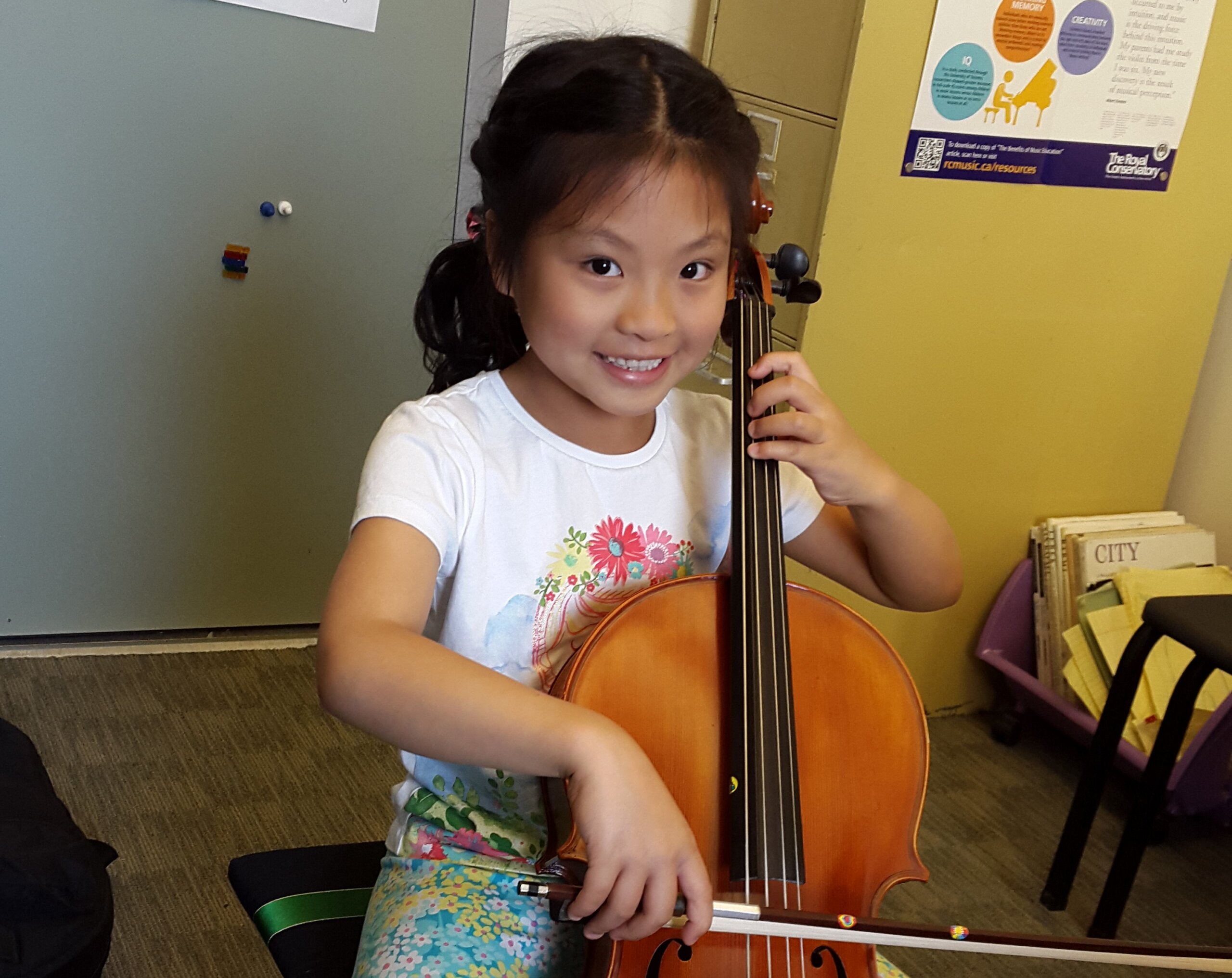
Every story has a beginning. Ally’s musical journey began in Sing Play Learn with MacPhail’s Musical Trolley class, a weekly class for students ages 4-6 years old still offered at MacPhail today. She picked up her first instrument, the cello, at just five years old in MacPhail’s Suzuki Talent Education program under the tutelage of the cello teacher she would have for the next 13 years, Joe Kaiser.
Ally’s father Kirby recounts their family’s introduction to the program. “Connie (Ally’s mother) did some research and found the Suzuki program at MacPhail. She said, ‘Well, I believe we need to give these things a try, right?.’ At first, I was not convinced because it seemed like a grind for us, but I went to an introduction event, came back and said, ‘let’s sign them up’”.
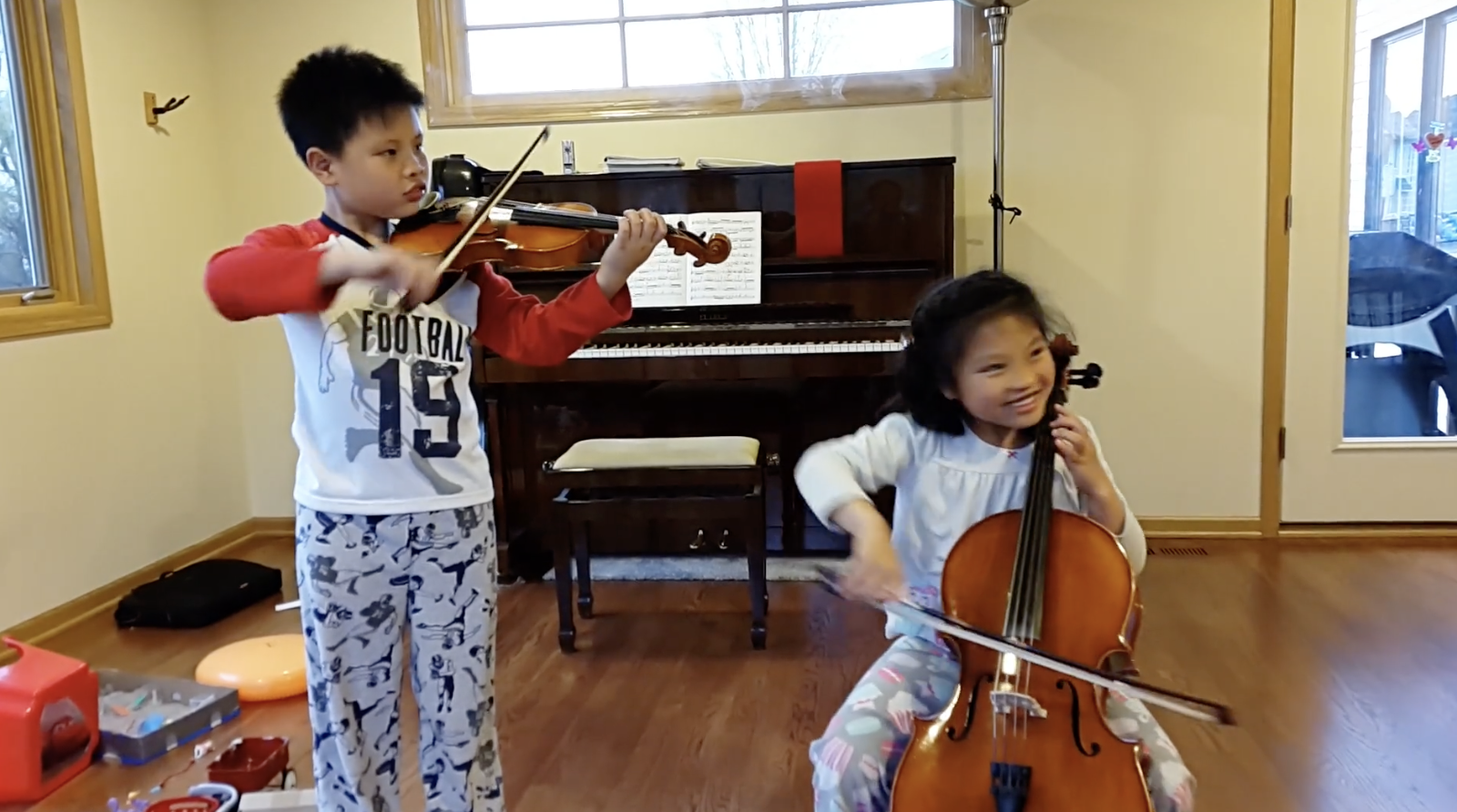
As Ally recalls, “I started cello when I was five. My brother also started violin when he was five too, so it was kind of like a family thing that we started an instrument at that age. I really wanted to do something different than my brother. So, I chose cello because it’s different. We sat in on one of Joe’s lessons, and we liked his teaching style.” The Hsiehs also praised Joe’s knack for making difficult concepts easy for young children to grasp through fun and engaging games.
But becoming a high-performing musician on three instruments wasn’t on their mind when enrolling both Ally and her brother in lessons. “We didn’t really have hope that the kids would become musicians when we signed them up for music education, but we believe music is a very important enrichment skill. We believe the nature of learning music sets a really strong foundation for them. Not only learning the music itself, but also trains them to be disciplined, structured in practice, and eventually helps them learn to be expressive with emotion. So, it’s a very important skill to have.”
The Importance of Community
It’s clear in speaking with Ally that her humility and maturity are well beyond her years. When asking her about the many prestigious performances and awards she’s received, she chose to speak about her purpose for making music with an emphasis on community.
“There’s two purposes for making music to me. Music is a really good way to form community and share what you’ve been working on with people. When I perform, it’s usually for my studio or other groups at MacPhail, so you keep seeing the same people over and over again.” When speaking on performing at Carnegie Hall, “there were a lot of other performers too, so it was cool to see everyone from across the U.S. performing with different instruments and at different ages.”
“I like seeing how much I can change my next performance to be a little different or improve my playing. Music has taught me discipline. That’s a big one. If you want to improve at something, you have to show up every day, even if it’s not for a long time, but an intentional amount of time.”
In speaking about MacPhail, Ally emphasized the many opportunities and resources available, but also the relationships she’s built.
“You get to know a lot of the faculty who are very kind, and I feel like I’ve formed relationships with them. Not even just my teachers, but also the people who have accompanied me over the years. Also, the kids and the parents over time, they recognize you. I remember at my last recital, a bunch of parents came up to me and talked to me about my journey. I wouldn’t think that there were so many people I had an impact on, but there were. They told me how I inspired their kids and how great it was to see me over the years.”
The Right Teacher Makes All the Difference
Each of Ally’s three instructors had many similar things to say about her intuitiveness, her musicality, and the person that she is.
Joe Kaiser, Ally’s first and longest MacPhail teacher, gave his perspective on what it’s been like to watch her grow as a person and musician from age 5 to 18. “It’s hard to sum it up, but it’s pretty amazing to watch someone become a human being. When she first started lessons, she was so shy. I think we probably went several months before I heard her speak, but I always knew she was listening, engaged, and fully present. As she grew, she became more confident.”
Ally would begin piano at 7 with former MacPhail teacher Antonia Daskalova then at 9 with Miryana Moteva, who would be her piano teacher for the next 9 years. “When she first came to me, piano was just for fun. She had these beautiful hands and was very musical. I told her she could play a Disney song or whatever she wanted, but she also needed to have a classical piece. And in her usual lighthearted manner, she said, ‘okay’. She’s kind of intuitive about everything connected with music, including the technical aspects, so it was not hard to guide her. She’s one of those students that makes you feel very energized after you give them a lesson, because she’s ready to learn, take what you give her, reflect on it, put it into practice, and master it. So, every lesson feels like you’re not just teaching a student, but you’re exchanging knowledge and mentoring someone.
Ally has not only been taught by Moteva but has performed alongside her as well.
When Ally showed interest in taking voice lessons, Moteva would recommend her to a voice colleague at MacPhail. “I really like K-pop, and I had been dancing a lot at the time, so I thought maybe if I started learning how to sing, I could get into that.”
Hsieh would start taking voice lessons, her most recent instrument, at thirteen years old with Dr. Mikyoung Park. Voice would lead her to winning a national competition and a chance to perform at Carnegie Hall.
“She came to me when she was 13, which is kind of risky at that age for voice, but she practiced a lot and is a fast learner”, says Dr. Mikyoung Park. “She’s done musical theatre, K-pop, and several Italian, German, and Korean art songs, one of which she performed at Carnegie Hall. I’m Korean, so I’m very proud of that. She has to split time for different instruments, and I still don’t know how she managed it for each at such a good level. She doesn’t really avoid the challenge. She always says, ‘Oh, I can do it.’” That dedication is evident in many ways, including taking voice lessons at 8:00 am on a Saturday morning.
Ally also expressed the impact her teachers have had on her and the non-musical lessons she learned. “Taking lessons with Joe, that was my first instance ever of knowing if you want something, you have to start working towards it. You have to put the work into it. With Miryana, she definitely taught me to be very detail-oriented. Even if you think you’re playing good enough, you should keep investigating. Mikyoung, I feel like she’s really pushed me to take opportunities. That you have to go out there and look for opportunities to take. She’s pushed me to look for those new opportunities.”
Three Instruments, Many Benefits
Each of Ally’s instructors noted how her exceptional proficiency on multiple instruments shows within each instrument itself.
“Her left hand is very developed, and her dexterity is very strong, having played the cello”, says Moteva. “But also her listening. With piano, it’s easier to kind of focus on the top voice, but she has experience playing in the lower parts of the orchestra, so she has more acute listening skills. Her harmonic listening is pretty developed. When she started singing arias, it was easy to make comparisons. In piano playing, we’re always trying to imitate the voice. Playing legato is one of the hardest things. I would ask her to sing something and then play it in comparison. It’s amazing to be able to be immersed in three different instruments, and one of them being the voice. It can only affect each instrument positively and make you grow faster. I very much value the fact that she had the opportunity to learn all three instruments.”
Kaiser echoed similar sentiments. “With the switch to piano, music theory things like scales, chords, and other music vocabulary seemed to make more sense to her as it was being reinforced in piano. When she started taking voice, we could talk a lot about phrasing and how to bring those techniques from voice into cello playing.” Kaiser even encouraged Ally to write lyrics to the Elgar Concerto, the piece that won her an opportunity to play with a professional orchestra through MacPhail’s Concerto & Aria competition, to learn to not only breathe better while playing her cello but use the lyrics to express her feelings and emotions.
“Playing cello and piano” Dr. Park says, “Speeds up the teaching. She can read music, and she understands how much effort she has to put in practice-wise to make it to that kind of a level. She is super smart, and academically, she’s great too.”
The Beauty of Family and Shining a Light on the Suzuki Triangle
Along with Ally’s natural talent, lighthearted demeanor, and exceptional intelligence, it’s clear that the Hsieh family values music. In fact, both Ally’s parents have learned an instrument either with her or after seeing her take lessons.
The Hsieh family is a shining example of the benefits of the “Suzuki Triangle” where parent, student, and teacher come together as a team in the music learning. It was her father Kirby, who had the first few Suzuki lessons with Joe Kaiser on cello, before Ally would join him in playing the instrument. Ally’s mother Connie, who learned piano years ago, would begin lessons with Miryana Moteva to continue her playing after Ally began. And both Connie and Kirby began joint voice lessons with Dr. Mikyoung Park following Ally’s lessons, to improve their singing skills for their church choir. “The music’s always been an important part of our family. Connie learned music when she was young as well. I played a little piano when I grew up, but not very good. But either way, we believe music will be able to enrich a person. I believe music truly is the solution for many things. And I think it just brings peace to people.” Kirby says.
Looking Ahead
Ally, to no surprise, is applying the discipline and intelligence she acquires into the field of electrical engineering. She plans to continue to make music. “I want to keep performing, because when you’re just doing academic stuff, it can feel mundane sometimes. So, I want to either join an orchestra or keep playing for my own personal enjoyment sometimes.”
Each of Ally’s instructors echoed almost identical sentiments, hoping she would continue to keep music in her life. When asked about his hope for Ally, Joe Kaiser poignantly stated, “In a way, I hope nothing for her because I just know she’s going to do great. She’s going to carry everything into the path she chooses. She’s going to be successful.”
As for Ally’s parents, we asked them what they want people to know about the person and musician their daughter is. Her father expressed, “There’s a quote that says, beautiful tone, beautiful heart. I believe Ally has those. I believe the music shapes a person’s character and integrities, and I think we see that in Ally, you know. I hope Ally can share her story, as an example for more people to get involved with music and just learn music.”
And Ally is doing just that. Her advice to anyone who’s looking to start their music journey:
“Well, I would say, just don’t be hesitant. In Mikyoung’s studio, I see a lot of kids, but a lot of adults taking lessons and performing. Even in my cello studio, I’ve seen more adults performing, even if it’s just with their kids. [Joe] has an adult cello choir. So, there are a lot of groups you can join, even if you’re starting later.”
“Music became a really big part of my life, and I’ve met a lot of great people through making music with them. Music is good to have in your life.”
It is fantastically evident that this symphony of one has been lovingly and intentionally cultivated by a symphony of community.
To learn how you can make music a part of your life and a part of your story, visit macphail.org.